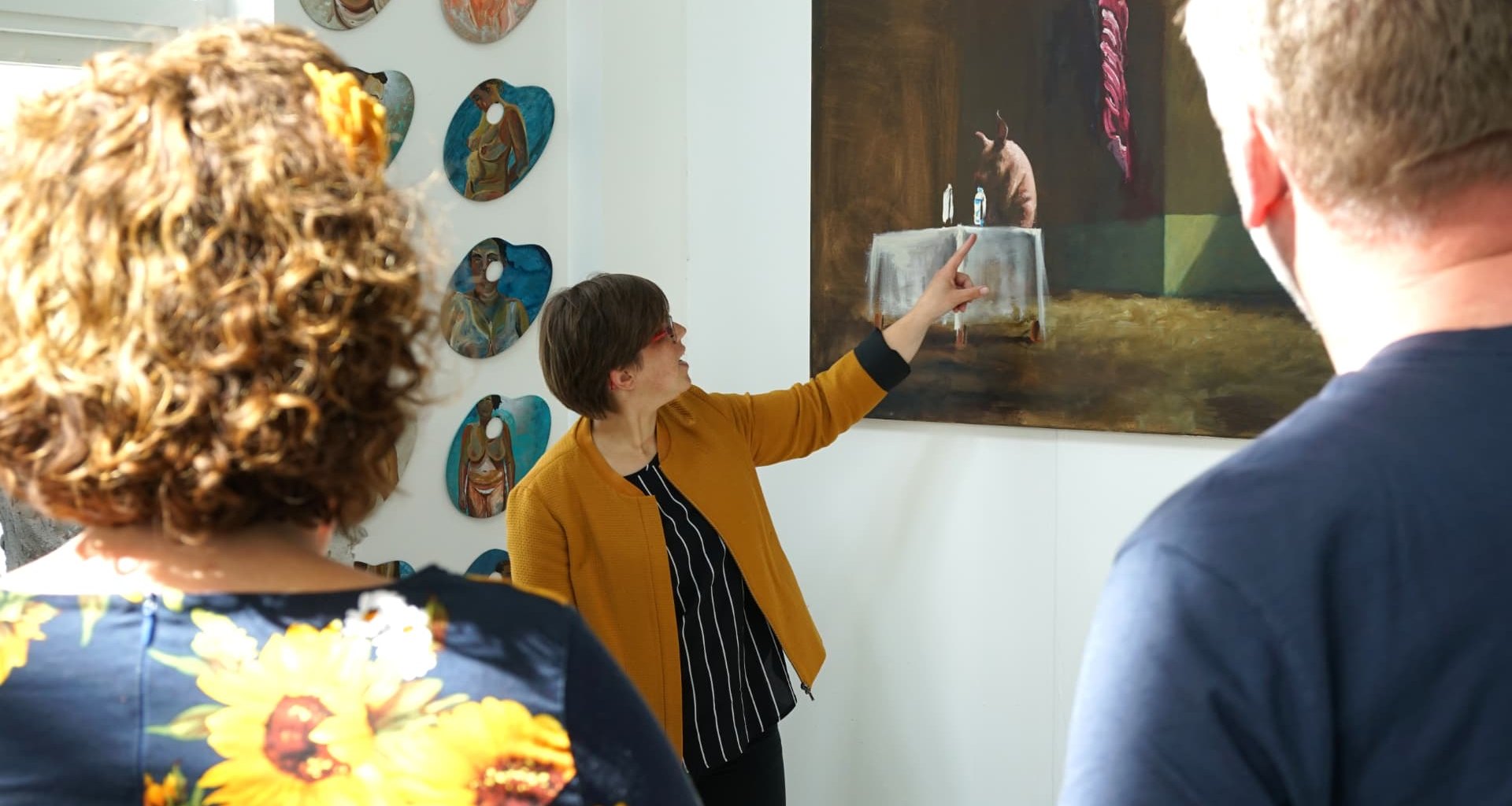
Invite visitors to take an active part. Explore playful, visitor-centred techniques that turn a group of listeners into a conversation full of different voices.
You’ll leave with a set of participation techniques and a planning template for your next tour.
Who it’s for
Museum educators, guides and public programme teams
What you’ll learn
Choose playful, visitor-centred techniques that suit your collection and audience.
Invite participation without putting people on the spot.
Build on what visitors offer so the conversation stays theirs.
Plan participation into a tour or programme from the start.
What you take away
Participation techniques for small groups, busy galleries and families.
Low-pressure ways to take part: writing, choosing, moving, drawing, answering.
A one-page planning template for a participatory tour.
Simple ways to notice what’s working and adjust as you go.
02
Connection comes first
Memorable, tours for people with dementia and their care-givers
Create welcoming museum moments for people living with dementia and their care-givers. Put shared discovery, enjoyment and connection at the heart of the visit.
You’ll leave with a tour structure, prompt cards and practical notes for a dementia-friendly visit.
Who it’s for
Guides and teams developing dementia-inclusive museum visits
What you’ll learn
Design a visit around enjoyment, familiarity and connection rather than recall.
Adapt pace, language and length so everyone can follow and take part.
Welcome care-givers as participants, not bystanders.
Notice and respond to non-verbal cues with confidence.
What you take away
A tour structure with timings: welcome, three works, a calm close.
Prompt cards with familiar, sensory and life-story questions.
Practical notes on room setup, seating, lighting and group size.
Simple ways to prepare and support care-givers before and after the visit.
03
A fresh perspective
Looking differently at guiding
Move from sharing information to creating conversations. Explore how looking closely, asking thoughtful questions and listening can change the way you guide.
You’ll leave with a question toolkit and a slow-looking tour structure you can use straight away.
Who it’s for
Museum guides, docents and education teams
What you’ll learn
Understand how Visual Thinking Strategies and slow looking turn a tour from telling to talking.
Ask open questions that invite observation rather than guesswork.
Listen closely and weave visitors’ answers back into the conversation.
Guide a group through one or two works confidently, without a script.
What you take away
A question toolkit: openers that work across a collection.
A slow-looking tour structure for one or two works, with timings.
Ways to meet silence, “I don’t know” and the visitor who talks too much.
A short reflection checklist to use after your next tour.
An AI-powered starting point
Your next oh my.
How we work
Thoughtful foundations. Playful practice.
Rooted in Visual Thinking Strategies, slow looking and visitor-centred techniques, our approach connects careful observation with genuine conversation.
For educators, that means better questions and closer listening. For museum leadership, it means an approach that puts visitor participation and inclusion at the centre.
01
Look with curiosity
Slow down and explore what visitors notice before moving to interpretation.
02
Listen to connect
Welcome different perspectives and let visitors’ contributions shape the conversation.
03
Invite, don’t prescribe
Use playful prompts and make room for people to participate in their own way.
Inclusive museum experiences
An oh my moment. For everyone.
We design experiences for visitors who are often overlooked, including people living with dementia and visitors who are blind or partially sighted. A museum visit can be about looking, feeling and connecting—not finding the right words or remembering the right facts.
Dementia & care-givers
Shared discoveries that value the person, welcome care-givers and leave room for enjoyment in the moment.
Blind & partially sighted visitors
Multisensory tours that use touch, sound, scent and movement, so visitors explore artworks with more than their eyes and tell us what they find.
Tell us what you need
Request a training.
Tell us who you guide and what you’d like to be different afterwards. We’ll read it carefully and think it through together with you.